कक्षा 11वीं — राजनीति विज्ञान
Class 11 Political Science
वार्षिक परीक्षा 2024–25 | Annual Examination 2024–25 | पूर्ण द्विभाषी समाधान / Complete Bilingual Solutions
प्रश्न 1. बहुविकल्पीय प्रश्न (MCQs)
(A) भारत में निर्वाचन आयोग की स्थापना किस अनुच्छेद के तहत की गई है?
English: Which Article provides for the establishment of the Election Commission of India?
- (अ) अनुच्छेद 208 / Article 208
- (ब) अनुच्छेद 324 / Article 324
- (स) अनुच्छेद 345 / Article 345
- (द) अनुच्छेद 215 / Article 215
सही उत्तर / Correct Answer: (ब) अनुच्छेद 324 / Article 324
स्पष्टीकरण / Explanation: भारतीय संविधान का अनुच्छेद 324 निर्वाचन आयोग को चुनावों के अधीक्षण, निर्देशन और नियंत्रण की शक्ति प्रदान करता है।

Article 324 of the Indian Constitution vests the Election Commission with the power of superintendence, direction and control of elections.
(B) प्लेटो ने न्याय के बारे में अपनी किस पुस्तक में बताया?
English: In which book did Plato explain the theory of justice?
- (अ) द मीन कैम्फ / The Mein Kampf
- (ब) सिम्पोजियम / Symposium
- (स) द रिपब्लिक / The Republic
- (द) द स्टेट्समैन / The Statesman
सही उत्तर / Correct Answer: (स) द रिपब्लिक / The Republic
स्पष्टीकरण / Explanation: प्लेटो ने अपनी पुस्तक The Republic में न्याय और आदर्श राज्य की अवधारणा पर विचार प्रस्तुत किए हैं।
Plato discussed the concepts of justice and the ideal state in his book The Republic.
(C) ‘हानि सिद्धांत’ किस अवधारणा से संबंधित है?
English: Which concept is related to the “Harm Principle”?
- (अ) समानता / Equality
- (ब) न्याय / Justice
- (स) अधिकार / Rights
- (द) स्वतंत्रता / Freedom
सही उत्तर / Correct Answer: (द) स्वतंत्रता / Freedom
स्पष्टीकरण / Explanation: जॉन स्टुअर्ट मिल के अनुसार, व्यक्ति की स्वतंत्रता पर प्रतिबंध तभी उचित है जब उसके कार्यों से दूसरों को हानि पहुँचती हो।
According to John Stuart Mill, restricting an individual’s freedom is justified primarily to prevent harm to others.
(D) प्राकृतिक अधिकार हमें कहाँ से प्राप्त होते हैं?
English: We get natural rights from the following:
- (अ) संविधान / Constitution
- (ब) ईश्वर / God
- (स) प्रकृति / Nature
- (द) उपरोक्त में से कोई नहीं / None of the above
सही उत्तर / Correct Answer: (स) प्रकृति / Nature
स्पष्टीकरण / Explanation: प्राकृतिक अधिकार वे अधिकार हैं जिन्हें मनुष्य को मानव होने के कारण प्राप्त माना जाता है, न कि केवल राज्य द्वारा दिए जाने के कारण।
Natural rights are considered rights that people possess by virtue of being human, rather than rights granted solely by the state.
(E) भारतीय संविधान के किस अनुच्छेद में नागरिकता का वर्णन है?
English: Which Articles of the Indian Constitution describe citizenship?
- (अ) अनुच्छेद 9 से 10 / Articles 9–10
- (ब) अनुच्छेद 5 से 11 / Articles 5–11
- (स) अनुच्छेद 36 से 51 / Articles 36–51
- (द) अनुच्छेद 12 से 35 / Articles 12–35
सही उत्तर / Correct Answer: (ब) अनुच्छेद 5 से 11 / Articles 5–11
स्पष्टीकरण / Explanation: भारतीय संविधान के भाग II में अनुच्छेद 5 से 11 तक नागरिकता से संबंधित प्रावधान दिए गए हैं।
Part II of the Indian Constitution, comprising Articles 5 to 11, deals with citizenship.
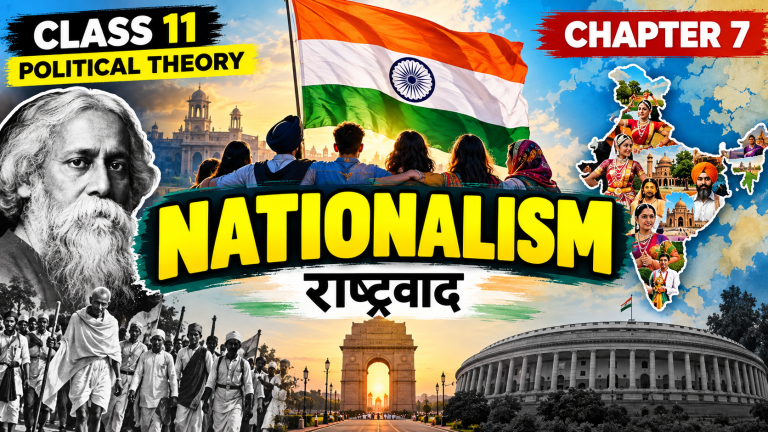
(F) राष्ट्रवाद के मार्ग की प्रमुख बाधा है—
English: The main obstacle to nationalism is—
- (अ) सांप्रदायिकता / Communalism
- (ब) निरक्षरता / Illiteracy
- (स) व्यक्तिगत स्वार्थ / Personal selfishness
- (द) उपरोक्त सभी / All of the above
सही उत्तर / Correct Answer: (द) उपरोक्त सभी / All of the above
स्पष्टीकरण / Explanation: सांप्रदायिकता, निरक्षरता और व्यक्तिगत स्वार्थ राष्ट्रीय एकता तथा राष्ट्रवाद की भावना को कमजोर कर सकते हैं।
Communalism, illiteracy and personal selfishness can weaken national unity and the spirit of nationalism.
प्रश्न 2. रिक्त स्थानों की पूर्ति कीजिए
Fill in the Blanks
(i) 21 वर्ष से घटाकर 18 वर्ष की मतदान आयु किस संविधान संशोधन द्वारा की गई?
उत्तर (Hindi): 61वें संविधान संशोधन द्वारा।
Answer (English): By the 61st Constitutional Amendment.
(ii) गांधीजी ने अपनी पुस्तक ______ में ‘स्वराज’ की अवधारणा दी।
उत्तर (Hindi): हिंद स्वराज।
Answer (English): Hind Swaraj.
(iii) सामाजिक न्याय की स्थापना के लिए ______ का योगदान सर्वोपरि है।
उत्तर (Hindi): डॉ. भीमराव अंबेडकर।
Answer (English): Dr. B. R. Ambedkar.
(iv) नागरिकों को अधिकारों के साथ-साथ ______ भी निभाने पड़ते हैं।
उत्तर (Hindi): कर्तव्यों।
Answer (English): Duties.
(v) उदारवादी राष्ट्रवाद ______ का विरोधी है।
उत्तर (Hindi): निरंकुशता का।
Answer (English): Authoritarianism / Despotism.
(vi) भारतीय संविधान की प्रस्तावना में ‘धर्मनिरपेक्ष’ शब्द ______ संविधान संशोधन द्वारा जोड़ा गया।
उत्तर (Hindi): 42वें संविधान संशोधन द्वारा।
Answer (English): By the 42nd Constitutional Amendment.
प्रश्न 3. सत्य अथवा असत्य लिखिए
Write True or False
(i) विधायिका कानूनों को लागू करती है।
उत्तर (Hindi): असत्य। विधायिका कानून बनाती है, जबकि कार्यपालिका उन्हें लागू करती है।
Answer (English): False. The legislature makes laws, whereas the executive implements them.
(ii) भारत के संविधान में न्यायिक पुनरावलोकन की शक्ति अमेरिका के संविधान से ली गई है।
उत्तर (Hindi): सत्य।
Answer (English): True.
(iii) सरकारिया आयोग केंद्र-राज्य संबंधों से संबंधित है।
उत्तर (Hindi): सत्य।
Answer (English): True.
(iv) जापान के संविधान को ‘शांति का संविधान’ कहा जाता है।
उत्तर (Hindi): सत्य।
Answer (English): True.
(v) समानता तथा सामाजिक न्याय परस्पर विरोधी हैं।
उत्तर (Hindi): असत्य। समानता और सामाजिक न्याय एक-दूसरे के पूरक हैं।
Answer (English): False. Equality and social justice are complementary to each other.
(vi) भारत में किसी एक विशेष धर्म को संरक्षण प्रदान किया जाता है।
उत्तर (Hindi): असत्य। भारत एक धर्मनिरपेक्ष राज्य है और सभी धर्मों को समान सम्मान देता है।
Answer (English): False. India is a secular state and respects all religions equally.
प्रश्न 4. सही जोड़ियाँ मिलाइए
Match the Following
| स्तंभ (I) / Column (A) | सही मिलान / Correct Match |
|---|---|
| (i) धार्मिक स्वतंत्रता / Religious Freedom | (ग) अनुच्छेद 25 से 28 / Articles 25–28 |
| (ii) मंत्रिपरिषद का गठन / Formation of Council of Ministers | (क) अनुच्छेद 74 / Article 74 |
| (iii) संघवाद / Federalism | (ख) कनाडा / Canada |
| (iv) अनुच्छेद 370 / Article 370 | (च) जम्मू-कश्मीर / Jammu and Kashmir |
| (v) मानव अधिकार / Human Rights | (घ) एमनेस्टी इंटरनेशनल / Amnesty International |
| (vi) नागरिकता / Citizenship | (छ) जन्म द्वारा / By birth |
| (vii) धर्मनिरपेक्षता की कमी / Drawback of Secularism | (ङ) वोट बैंक की राजनीति / Vote-bank politics |
ध्यान दें / Note: संघवाद के लिए कनाडा का उदाहरण संविधान के संघीय ढाँचे से संबंधित है। प्रश्नपत्र में दिए गए विकल्पों के अनुसार ही मिलान किया गया है।
प्रश्न 5. एक शब्द या वाक्य में उत्तर दीजिए
Answer in One Word or Sentence
(i) भारतीय संविधान में ‘अवशिष्ट शक्तियाँ’ किस देश के संविधान से ली गई हैं?
उत्तर (Hindi): कनाडा।
Answer (English): Canada.
(ii) राज्यसभा के सदस्यों को कितने वर्ष के लिए निर्वाचित किया जाता है?
उत्तर (Hindi): छह वर्ष।
Answer (English): Six years.
(iii) मध्य प्रदेश का उच्च न्यायालय किस शहर में स्थित है?
उत्तर (Hindi): जबलपुर।
Answer (English): Jabalpur.
(iv) भारत में भाषा के आधार पर सबसे पहले किस राज्य का गठन हुआ?
उत्तर (Hindi): आंध्र प्रदेश।
Answer (English): Andhra Pradesh.
(v) भारत में स्थानीय स्वशासन का जनक किसे कहा जाता है?
उत्तर (Hindi): लॉर्ड रिपन।
Answer (English): Lord Ripon.
(vi) ‘एक व्यक्ति, एक वोट’ किस प्रकार की समानता के अंतर्गत आता है?
उत्तर (Hindi): राजनीतिक समानता।
Answer (English): Political equality.
(vii) भारत में किस प्रकार की कार्यपालिका है?
उत्तर (Hindi): संसदीय कार्यपालिका।
Answer (English): Parliamentary executive.
लघु उत्तरीय प्रश्न
Short Answer Questions
प्रश्न 6. भारतीय संविधान को तैयार होने में कितना समय लगा?
How much time did it take to prepare the Indian Constitution? (2 अंक / Marks)
उत्तर (Hindi): भारतीय संविधान को तैयार करने में 2 वर्ष, 11 महीने और 18 दिन लगे। संविधान सभा ने इसे 26 नवंबर 1949 को अंगीकृत किया।
Answer (English): It took 2 years, 11 months and 18 days to prepare the Indian Constitution. The Constituent Assembly adopted it on 26 November 1949.
अथवा / OR
भारतीय संविधान में ‘स्वतंत्रता, समानता और बंधुत्व’ का सिद्धांत किस देश के संविधान से लिया गया है?
From which country’s Constitution were the principles of Liberty, Equality and Fraternity taken?
उत्तर (Hindi): ये आदर्श फ्रांस की क्रांति से प्रेरित हैं और फ्रांसीसी संविधान से संबंधित माने जाते हैं।
Answer (English): These ideals were inspired by the French Revolution and are associated with the French Constitution.
प्रश्न 7. शासन के तीन अंगों के नाम लिखिए।
Write the names of the three organs of government. (2 अंक / Marks)
उत्तर (Hindi):
- विधायिका
- कार्यपालिका
- न्यायपालिका
Answer (English):
- Legislature
- Executive
- Judiciary
शासन के तीन अंग / Three Organs of Government
विधायिका / Legislature
कानून बनाती है / Makes laws
कार्यपालिका / Executive
कानून लागू करती है / Implements laws
न्यायपालिका / Judiciary
न्याय करती है और कानून की व्याख्या करती है / Administers justice and interprets laws
अथवा / OR
वर्ष 1946 में उद्देश्य प्रस्ताव किसने प्रस्तुत किया?
Who presented the Objectives Resolution in 1946?
उत्तर (Hindi): पंडित जवाहरलाल नेहरू ने 13 दिसंबर 1946 को उद्देश्य प्रस्ताव प्रस्तुत किया था।
Answer (English): Pandit Jawaharlal Nehru presented the Objectives Resolution on 13 December 1946.
प्रश्न 8. धन विधेयक संसद के किस सदन में प्रस्तुत किया जाता है? धन विधेयक किस अनुच्छेद के अंतर्गत आता है?
In which House of Parliament is a Money Bill introduced? Under which Article does it come? (2 अंक / Marks)
उत्तर (Hindi): धन विधेयक केवल लोकसभा में प्रस्तुत किया जाता है। भारतीय संविधान का अनुच्छेद 110 धन विधेयक की परिभाषा देता है।
Answer (English): A Money Bill can be introduced only in the Lok Sabha. Article 110 of the Indian Constitution defines a Money Bill.
अथवा / OR
संसद द्वारा कार्यपालिका को उत्तरदायी बनाने का सबसे प्रभावी तरीका क्या है?
What is the most effective way for Parliament to make the executive accountable?
उत्तर (Hindi): प्रश्नकाल, अविश्वास प्रस्ताव तथा संसदीय चर्चाओं के माध्यम से संसद कार्यपालिका को उत्तरदायी बनाती है।
Answer (English): Parliament holds the executive accountable through Question Hour, no-confidence motions and parliamentary debates.
प्रश्न 9. जनहित याचिका से आप क्या समझते हैं?
What do you understand by Public Interest Litigation (PIL)? (2 अंक / Marks)
उत्तर (Hindi): जनहित याचिका वह याचिका है जो व्यापक जनहित या वंचित लोगों के अधिकारों की रक्षा के लिए न्यायालय में दायर की जाती है।
Answer (English): Public Interest Litigation (PIL) is a petition filed before a court to protect the public interest or the rights of disadvantaged people.
अथवा / OR
हमें स्वतंत्र न्यायपालिका की आवश्यकता क्यों है? कोई तीन बिंदु लिखिए।
Why do we need an independent judiciary? Write any three points.
उत्तर (Hindi):
- नागरिकों के अधिकारों की रक्षा के लिए।
- संविधान की सर्वोच्चता बनाए रखने के लिए।
- सरकार की मनमानी पर नियंत्रण रखने के लिए।
Answer (English):
- To protect citizens’ rights.
- To uphold the supremacy of the Constitution.
- To check arbitrary actions of the government.
प्रश्न 10. संविधान क्या है? लिखिए।
What is the Constitution? (2 अंक / Marks)
उत्तर (Hindi): संविधान देश का सर्वोच्च कानून है। यह सरकार की संरचना, शक्तियों, कार्यों तथा नागरिकों के अधिकारों और कर्तव्यों को निर्धारित करता है।
Answer (English): A Constitution is the supreme law of a country. It defines the structure, powers and functions of government and the rights and duties of citizens.
अथवा / OR
सार्वभौमिक वयस्क मताधिकार क्या है?
What is Universal Adult Franchise?
उत्तर (Hindi): सार्वभौमिक वयस्क मताधिकार का अर्थ है कि निर्धारित आयु पूरी करने वाले सभी पात्र नागरिकों को बिना भेदभाव मतदान का अधिकार प्राप्त हो।
Answer (English): Universal Adult Franchise means that all eligible citizens who have attained the prescribed age have the right to vote without discrimination.
प्रश्न 11. राजनीतिक सिद्धांत से क्या आशय है? इसकी दो विशेषताएँ लिखिए।
What is meant by Political Theory? Write its two characteristics. (2 अंक / Marks)
उत्तर (Hindi): राजनीतिक सिद्धांत राजनीति से संबंधित विचारों, मूल्यों और अवधारणाओं का व्यवस्थित अध्ययन है।
दो विशेषताएँ:
- यह स्वतंत्रता, समानता और न्याय जैसे राजनीतिक मूल्यों का अध्ययन करता है।
- यह राजनीतिक संस्थाओं और व्यवहार का विश्लेषण करता है।
Answer (English): Political Theory is the systematic study of political ideas, values and concepts.
Two characteristics:
- It studies political values such as liberty, equality and justice.
- It analyses political institutions and behaviour.
अथवा / OR
राजनीतिक सिद्धांत के दो प्रमुख उद्देश्य लिखिए।
Write two main objectives of Political Theory.
उत्तर (Hindi):
- राजनीतिक अवधारणाओं और मूल्यों को स्पष्ट करना।
- राजनीतिक संस्थाओं और नीतियों का आलोचनात्मक मूल्यांकन करना।
Answer (English):
- To clarify political concepts and values.
- To critically evaluate political institutions and policies.
प्रश्न 12. ‘समाजवाद’ की अवधारणा को समझाते हुए भारत के प्रसिद्ध समाजवादी चिंतक का नाम लिखिए।
Describe the concept of Socialism and name a famous socialist thinker of India. (2 अंक / Marks)
उत्तर (Hindi): समाजवाद ऐसी विचारधारा है जो सामाजिक-आर्थिक समानता, संसाधनों के न्यायपूर्ण वितरण तथा शोषण को कम करने पर बल देती है। भारत के प्रसिद्ध समाजवादी चिंतक राम मनोहर लोहिया थे।
Answer (English): Socialism is an ideology that emphasises socio-economic equality, fair distribution of resources and the reduction of exploitation. A famous Indian socialist thinker was Ram Manohar Lohia.
अथवा / OR
समानता के दो आयाम लिखिए।
Write the two aspects of Equality.
उत्तर (Hindi):
- राजनीतिक समानता
- सामाजिक समानता
Answer (English):
- Political equality
- Social equality
प्रश्न 13. अधिकारों के कोई दो महत्त्व लिखिए।
Write any two points on the importance of Rights. (2 अंक / Marks)
उत्तर (Hindi):
- अधिकार व्यक्ति की स्वतंत्रता और गरिमा की रक्षा करते हैं।
- अधिकार नागरिकों को सरकार की मनमानी के विरुद्ध संरक्षण देते हैं।
Answer (English):
- Rights protect individual liberty and dignity.
- Rights protect citizens against arbitrary actions of the government.
अथवा / OR
मूल अधिकार क्या हैं?
What are Fundamental Rights?
उत्तर (Hindi): मूल अधिकार वे बुनियादी अधिकार हैं जो संविधान द्वारा नागरिकों की स्वतंत्रता, समानता और गरिमा की रक्षा के लिए प्रदान किए गए हैं।
Answer (English): Fundamental Rights are basic rights guaranteed by the Constitution to protect people’s liberty, equality and dignity.
प्रश्न 14. नागरिकता का अर्थ एवं परिभाषा लिखिए।
Write the meaning and definition of Citizenship. (2 अंक / Marks)
उत्तर (Hindi): नागरिकता किसी राज्य की पूर्ण सदस्यता है। नागरिक को राज्य के प्रति अधिकार प्राप्त होते हैं तथा उसके प्रति कुछ कर्तव्य भी होते हैं।
Answer (English): Citizenship means full membership of a state. A citizen enjoys certain rights and also has duties towards the state.
अथवा / OR
नागरिकों के कोई दो मूल कर्तव्य लिखिए।
Write any two Fundamental Duties of citizens.
उत्तर (Hindi):
- संविधान, राष्ट्रीय ध्वज और राष्ट्रगान का सम्मान करना।
- देश की एकता और अखंडता की रक्षा करना।
Answer (English):
- To respect the Constitution, the National Flag and the National Anthem.
- To safeguard the unity and integrity of the country.
प्रश्न 15. धर्मनिरपेक्षता क्या है?
What is Secularism? (2 अंक / Marks)
उत्तर (Hindi): धर्मनिरपेक्षता का अर्थ है कि राज्य किसी एक धर्म को अपना राजधर्म नहीं मानता तथा सभी धर्मों के प्रति समान व्यवहार करता है।
Answer (English): Secularism means that the state does not adopt one religion as its official religion and treats all religions equally.
अथवा / OR
धर्मनिरपेक्ष राज्य की कोई दो विशेषताएँ लिखिए।
Write any two characteristics of a secular state.
उत्तर (Hindi):
- राज्य का कोई आधिकारिक धर्म नहीं होता।
- सभी व्यक्तियों को धर्म मानने, आचरण करने और प्रचार करने की स्वतंत्रता कानून के अधीन प्राप्त होती है।
Answer (English):
- The state has no official religion.
- People enjoy freedom of religion, subject to constitutional and legal restrictions.
तीन अंकों वाले प्रश्न
Three-Mark Questions
प्रश्न 16. भारतीय चुनाव प्रणाली में सुधार के कोई तीन सुझाव दीजिए।
Give any three suggestions for improving the Indian Electoral System. (3 अंक / Marks)
उत्तर (Hindi):
- चुनावी खर्च पर नियंत्रण: चुनावों में धनबल के दुरुपयोग को रोकने के लिए प्रभावी निगरानी होनी चाहिए।
- आपराधिक पृष्ठभूमि पर नियंत्रण: उम्मीदवारों की आपराधिक पृष्ठभूमि की जानकारी मतदाताओं को उपलब्ध कराई जानी चाहिए।
- मतदाता जागरूकता: नागरिकों को निष्पक्ष और योग्य उम्मीदवार चुनने के लिए जागरूक किया जाना चाहिए।
Answer (English):
- Control of election expenditure: Effective monitoring should prevent the misuse of money in elections.
- Control of criminalisation: Voters should have access to information about candidates’ criminal backgrounds.
- Voter awareness: Citizens should be encouraged to choose honest and capable candidates.
अथवा / OR
भारत के निर्वाचन आयोग के तीन प्रमुख कार्य लिखिए।
Write three major functions of the Election Commission of India.
उत्तर (Hindi):
- लोकसभा, राज्य विधानसभाओं, राष्ट्रपति और उपराष्ट्रपति के चुनावों का संचालन करना।
- मतदाता सूची तैयार करने और उसे अद्यतन रखने की व्यवस्था करना।
- स्वतंत्र और निष्पक्ष चुनाव सुनिश्चित करने के लिए चुनाव प्रक्रिया की निगरानी करना।
Answer (English):
- To conduct elections to the Lok Sabha, State Legislative Assemblies, the offices of the President and the Vice-President.
- To supervise the preparation and revision of electoral rolls.
- To monitor the electoral process to ensure free and fair elections.
प्रश्न 17. भारतीय संविधान एक बंद कानून की पुस्तक न होकर एक जीवंत दस्तावेज बन चुका है। स्पष्ट कीजिए।
The Indian Constitution has become a living document rather than a closed book of law. Explain. (3 अंक / Marks)
उत्तर (Hindi):
भारतीय संविधान को जीवंत दस्तावेज कहा जाता है क्योंकि—
- संविधान में आवश्यकतानुसार संशोधन किए जा सकते हैं।
- न्यायपालिका की व्याख्याएँ संवैधानिक प्रावधानों को बदलती परिस्थितियों में लागू करने में सहायता करती हैं।
- संविधान लोकतांत्रिक मूल्यों को बनाए रखते हुए समाज की बदलती आवश्यकताओं के अनुरूप कार्य करता है।
Answer (English):
The Indian Constitution is called a living document because—
- It can be amended according to changing needs.
- Judicial interpretations help apply constitutional provisions to changing circumstances.
- It responds to the changing needs of society while preserving democratic values.
अथवा / OR
RTI क्या है? स्पष्ट कीजिए।
What is RTI? Explain.
उत्तर (Hindi):
RTI का पूरा नाम सूचना का अधिकार (Right to Information) है। सूचना का अधिकार अधिनियम, 2005 नागरिकों को सार्वजनिक प्राधिकरणों से सूचना प्राप्त करने का अधिकार देता है। इससे सरकारी कार्यों में पारदर्शिता और जवाबदेही बढ़ती है तथा भ्रष्टाचार पर नियंत्रण में सहायता मिलती है।
Answer (English):
RTI stands for Right to Information. The Right to Information Act, 2005, enables citizens to obtain information from public authorities. It promotes transparency and accountability in government functioning and helps curb corruption.
प्रश्न 18. समानता के किन्हीं तीन प्रकारों का वर्णन कीजिए।
Describe any three types of Equality. (3 अंक / Marks)
उत्तर (Hindi):
- राजनीतिक समानता: सभी पात्र नागरिकों को समान राजनीतिक अधिकार प्राप्त होते हैं, जैसे मतदान का अधिकार।
- सामाजिक समानता: जाति, धर्म, लिंग या जन्म के आधार पर अनुचित भेदभाव नहीं होना चाहिए।
- आर्थिक समानता: प्रत्येक व्यक्ति को अपनी आवश्यकताओं की पूर्ति और विकास के लिए उचित अवसर मिलने चाहिए तथा अत्यधिक आर्थिक असमानता कम की जानी चाहिए।
Answer (English):
- Political Equality: All eligible citizens enjoy equal political rights, such as the right to vote.
- Social Equality: Unjust discrimination based on caste, religion, gender or birth should be eliminated.
- Economic Equality: Everyone should have fair opportunities to meet basic needs and develop, while excessive economic inequalities should be reduced.
अथवा / OR
नागरिक समानता का क्या महत्त्व है?
What is the importance of citizen equality?
उत्तर (Hindi):
नागरिक समानता लोकतंत्र का आधार है। यह सभी नागरिकों को समान कानूनी दर्जा और अधिकार प्रदान करती है। इससे भेदभाव कम होता है, सामाजिक न्याय को बढ़ावा मिलता है तथा प्रत्येक नागरिक को देश के विकास में भाग लेने का अवसर मिलता है।
Answer (English):
Citizen equality is the foundation of democracy. It provides equal legal status and rights to citizens. It reduces discrimination, promotes social justice and enables everyone to participate in the development of the country.
प्रश्न 19. राष्ट्र के प्रमुख तत्त्व लिखकर किसी एक तत्त्व की व्याख्या कीजिए।
Write the main elements of a nation and explain any one element. (3 अंक / Marks)
उत्तर (Hindi):
राष्ट्र के प्रमुख तत्त्वों में साझा इतिहास, संस्कृति, भाषा, क्षेत्र, सामूहिक पहचान तथा एकता की भावना शामिल हो सकते हैं।
सामूहिक पहचान: जब लोग स्वयं को एक साझा समुदाय का हिस्सा मानते हैं और उनमें एकता तथा परस्पर जुड़ाव की भावना होती है, तो यह राष्ट्र की भावना को मजबूत करती है।
Answer (English):
The main elements of a nation may include shared history, culture, language, territory, collective identity and a sense of unity.
Collective Identity: When people consider themselves members of a common community and share a sense of unity and belonging, it strengthens the idea of a nation.
अथवा / OR
राष्ट्रवाद से क्या आशय है? राष्ट्रवाद की तीन बाधाएँ लिखिए।
What is meant by Nationalism? Write three obstacles to Nationalism.
उत्तर (Hindi):
राष्ट्रवाद वह भावना है जिसमें लोग अपने राष्ट्र के प्रति एकता, निष्ठा और अपनत्व अनुभव करते हैं।
राष्ट्रवाद की तीन प्रमुख बाधाएँ हैं—
- सांप्रदायिकता
- निरक्षरता
- व्यक्तिगत स्वार्थ
Answer (English):
Nationalism is a feeling of unity, loyalty and belonging towards one’s nation.
Three major obstacles to nationalism are—
- Communalism
- Illiteracy
- Personal selfishness
चार अंकों वाले प्रश्न
Four-Mark Questions
प्रश्न 20. संविधान के किस अनुच्छेद में संवैधानिक उपचारों का अधिकार वर्णित है? संवैधानिक उपचार कौन-कौन से हैं? समझाइए।
In which Article of the Constitution is the Right to Constitutional Remedies described? What are the constitutional remedies? Explain. (4 अंक / Marks)
उत्तर (Hindi):
भारतीय संविधान के अनुच्छेद 32 में संवैधानिक उपचारों के अधिकार का प्रावधान है। डॉ. भीमराव अंबेडकर ने इसे संविधान का हृदय और आत्मा कहा था।
मूल अधिकारों के उल्लंघन पर सर्वोच्च न्यायालय पाँच प्रकार की रिट जारी कर सकता है—
- बंदी प्रत्यक्षीकरण (Habeas Corpus): अवैध रूप से हिरासत में लिए गए व्यक्ति को न्यायालय के समक्ष प्रस्तुत करने का आदेश।
- परमादेश (Mandamus): किसी सार्वजनिक अधिकारी या संस्था को उसका कानूनी कर्तव्य पूरा करने का आदेश।
- प्रतिषेध (Prohibition): अधीनस्थ न्यायालय को अपने अधिकार क्षेत्र से बाहर कार्यवाही करने से रोकना।
- उत्प्रेषण (Certiorari): अधीनस्थ न्यायालय के आदेश या मामले को जाँच के लिए उच्च न्यायालय में मँगाना या आदेश को निरस्त करना।
- अधिकार-पृच्छा (Quo Warranto): किसी व्यक्ति से यह पूछना कि वह किस कानूनी अधिकार से सार्वजनिक पद धारण कर रहा है।
Answer (English):
The Right to Constitutional Remedies is provided under Article 32 of the Indian Constitution. Dr. B. R. Ambedkar called it the heart and soul of the Constitution.
The Supreme Court can issue five types of writs to protect Fundamental Rights:
- Habeas Corpus: Orders that a detained person be produced before the court to examine the legality of detention.
- Mandamus: Directs a public authority to perform its legal duty.
- Prohibition: Prevents a lower court from proceeding beyond its jurisdiction.
- Certiorari: Allows a higher court to review or quash an order of a lower court.
- Quo Warranto: Questions the legal authority of a person holding a public office.
संवैधानिक उपचार / Constitutional Remedies

बंदी प्रत्यक्षीकरण / Habeas Corpus
अवैध हिरासत की जाँच / Checks unlawful detention

परमादेश / Mandamus
कानूनी कर्तव्य पूरा कराने का आदेश / Orders performance of a legal duty

प्रतिषेध एवं उत्प्रेषण / Prohibition and Certiorari
न्यायिक अधिकार क्षेत्र और आदेशों की जाँच / Control of jurisdiction and review of orders
अथवा / OR
नीति-निदेशक तत्त्वों एवं मौलिक अधिकारों में अंतर स्पष्ट कीजिए।
Explain the difference between Directive Principles and Fundamental Rights.
| आधार / Basis | मौलिक अधिकार / Fundamental Rights | नीति-निदेशक तत्त्व / Directive Principles |
|---|---|---|
| उद्देश्य / Purpose | व्यक्ति की स्वतंत्रता और अधिकारों की रक्षा / Protect individual rights and freedoms | कल्याणकारी राज्य की स्थापना / Establish a welfare state |
| स्थान / Location | संविधान का भाग III / Part III of the Constitution | संविधान का भाग IV / Part IV of the Constitution |
| न्यायालय / Courts | उल्लंघन होने पर न्यायालय में प्रवर्तनीय / Enforceable by courts | न्यायालय द्वारा सीधे प्रवर्तनीय नहीं / Not directly enforceable by courts |
| प्रकृति / Nature | राज्य पर कानूनी सीमाएँ लगाते हैं / Impose legal limits on the state | शासन के लिए मार्गदर्शक सिद्धांत हैं / Guide the state in governance |
प्रश्न 21. जिला पंचायत, पंचायती राज व्यवस्था का कौन-सा स्तर है? जिला पंचायत के कोई तीन कार्य लिखिए।
Which is the level of District Panchayat in the Panchayati Raj System? Write any three functions of the District Panchayat. (4 अंक / Marks)
उत्तर (Hindi):
जिला पंचायत पंचायती राज व्यवस्था का तीसरा और जिला स्तर है। यह ग्रामीण क्षेत्रों में विकास योजनाओं के समन्वय और क्रियान्वयन में महत्त्वपूर्ण भूमिका निभाती है।
इसके तीन कार्य हैं—
- जिले में ग्रामीण विकास योजनाओं का समन्वय करना।
- पंचायत समितियों तथा ग्राम पंचायतों के विकास कार्यों की निगरानी और समीक्षा करना।
- ग्रामीण क्षेत्रों में शिक्षा, स्वास्थ्य, सड़क और अन्य विकास कार्यों को बढ़ावा देना।
Answer (English):
The District Panchayat is the third and district-level tier of the Panchayati Raj System. It plays an important role in coordinating and implementing rural development programmes.
Three functions are—
- To coordinate rural development schemes in the district.
- To monitor and review the development activities of Panchayat Samitis and Gram Panchayats.
- To promote education, healthcare, roads and other development activities in rural areas.
अथवा / OR
राज्य वित्त आयोग के चार कार्य लिखिए।
Write four functions of the State Finance Commission.
उत्तर (Hindi):
- पंचायतों और नगरपालिकाओं की वित्तीय स्थिति की समीक्षा करना।
- राज्य और स्थानीय निकायों के बीच करों, शुल्कों और अन्य राजस्व के वितरण की सिफारिश करना।
- स्थानीय निकायों को दिए जाने वाले अनुदानों के सिद्धांत सुझाना।
- पंचायतों और नगरपालिकाओं की वित्तीय स्थिति सुधारने के उपायों की सिफारिश करना।
Answer (English):
- To review the financial position of Panchayats and Municipalities.
- To recommend the distribution of taxes, duties, tolls and fees between the state and local bodies.
- To recommend principles governing grants-in-aid to local bodies.
- To suggest measures to improve the financial position of Panchayats and Municipalities.
प्रश्न 22. स्वतंत्रता की सकारात्मक एवं नकारात्मक अवधारणाओं में क्या अंतर है? कोई चार अंतर लिखिए।
What are the differences between the positive and negative aspects of Freedom? Write any four differences. (4 अंक / Marks)
उत्तर (Hindi):
स्वतंत्रता की नकारात्मक अवधारणा का अर्थ अनावश्यक बाहरी प्रतिबंधों का अभाव है, जबकि सकारात्मक स्वतंत्रता का अर्थ व्यक्ति को अपनी क्षमताओं के विकास के लिए आवश्यक अवसर और परिस्थितियाँ उपलब्ध होना है।
| आधार | नकारात्मक स्वतंत्रता | सकारात्मक स्वतंत्रता |
|---|---|---|
| 1. अर्थ | अनावश्यक प्रतिबंधों का अभाव | विकास के लिए आवश्यक अवसर |
| 2. मुख्य उद्देश्य | व्यक्ति के कार्यों में अनुचित हस्तक्षेप रोकना | व्यक्ति की क्षमताओं का विकास |
| 3. राज्य की भूमिका | अनावश्यक हस्तक्षेप से बचना | शिक्षा, स्वास्थ्य और अवसर उपलब्ध कराना |
| 4. प्रमुख विचार | व्यक्ति को बाहरी नियंत्रण से मुक्ति | व्यक्ति को वास्तविक स्वतंत्रता प्राप्त होना |
Answer (English):
Negative liberty means the absence of unnecessary external restrictions, whereas positive liberty means having the opportunities and conditions necessary for developing one’s abilities.
| Basis | Negative Liberty | Positive Liberty |
|---|---|---|
| 1. Meaning | Absence of unnecessary restrictions | Availability of opportunities for development |
| 2. Main aim | To prevent unjustified interference | To develop individual capabilities |
| 3. Role of the state | Avoid unnecessary interference | Provide education, healthcare and opportunities |
| 4. Main idea | Freedom from external control | Ability to exercise freedom meaningfully |
अथवा / OR
अभिव्यक्ति की स्वतंत्रता का क्या अर्थ है? आपकी राय में अभिव्यक्ति की स्वतंत्रता पर उचित प्रतिबंध क्या होंगे?
What is freedom of expression? What do you think would be appropriate restrictions on freedom of expression?
उत्तर (Hindi):
अभिव्यक्ति की स्वतंत्रता का अर्थ है अपने विचारों, मतों और भावनाओं को बोलकर, लिखकर या अन्य माध्यमों से व्यक्त करने का अधिकार। भारतीय संविधान के अनुच्छेद 19(1)(क) में वाक् एवं अभिव्यक्ति की स्वतंत्रता दी गई है।
इस स्वतंत्रता पर अनुच्छेद 19(2) के अंतर्गत उचित प्रतिबंध लगाए जा सकते हैं, जैसे—
- देश की संप्रभुता और अखंडता की रक्षा।
- सार्वजनिक व्यवस्था बनाए रखना।
- मानहानि और न्यायालय की अवमानना रोकना।
- हिंसा के लिए उकसाने तथा अपराध को बढ़ावा देने पर रोक लगाना।
Answer (English):
Freedom of expression means the right to express one’s thoughts, opinions and feelings through speech, writing or other means. Article 19(1)(a) of the Indian Constitution guarantees freedom of speech and expression.
Under Article 19(2), reasonable restrictions may be imposed to protect:
- The sovereignty and integrity of India.
- Public order.
- Reputation and the authority of courts.
- Public safety by restricting incitement to violence and other legally prohibited expression.
प्रश्न 23. सामाजिक न्याय का अर्थ स्पष्ट कीजिए एवं न्याय के प्रकार कौन-कौन से हैं?
Explain the meaning of social justice and write the types of social justice. (4 अंक / Marks)
उत्तर (Hindi):
सामाजिक न्याय का अर्थ है समाज के सभी व्यक्तियों को समान सम्मान, अधिकार और अवसर प्रदान करना तथा जाति, धर्म, लिंग या आर्थिक स्थिति के आधार पर होने वाले अन्यायपूर्ण भेदभाव को समाप्त करना।
न्याय के प्रमुख प्रकार निम्नलिखित हैं—
- सामाजिक न्याय: समाज में भेदभाव समाप्त करना और समान अवसर देना।
- आर्थिक न्याय: संसाधनों और अवसरों का उचित वितरण सुनिश्चित करना।
- राजनीतिक न्याय: सभी पात्र नागरिकों को समान राजनीतिक अधिकार प्रदान करना।
- कानूनी न्याय: कानून के समक्ष समानता तथा निष्पक्ष न्याय सुनिश्चित करना।
Answer (English):
Social justice means providing equal dignity, rights and opportunities to all individuals and eliminating unjust discrimination based on caste, religion, gender or economic status.
The major types of justice are—
- Social Justice: Eliminating discrimination and providing equal opportunities.
- Economic Justice: Ensuring fair distribution of resources and opportunities.
- Political Justice: Providing equal political rights to all eligible citizens.
- Legal Justice: Ensuring equality before the law and fair administration of justice.
अथवा / OR
वर्तमान में भारत में सामाजिक न्याय की क्या स्थिति है?
What is the current scenario of social justice in India?
उत्तर (Hindi):
भारत में सामाजिक न्याय की दिशा में कई महत्त्वपूर्ण प्रयास किए गए हैं। संविधान समानता, स्वतंत्रता और भेदभाव से सुरक्षा प्रदान करता है। अनुसूचित जातियों, अनुसूचित जनजातियों तथा अन्य पिछड़े वर्गों के लिए आरक्षण की व्यवस्था है। शिक्षा का अधिकार और विभिन्न कल्याणकारी योजनाएँ भी सामाजिक न्याय को बढ़ावा देती हैं।
हालाँकि, जातिगत भेदभाव, लैंगिक असमानता, गरीबी, बेरोजगारी और शिक्षा तथा स्वास्थ्य सुविधाओं तक असमान पहुँच जैसी चुनौतियाँ अभी भी मौजूद हैं। इसलिए सामाजिक न्याय प्राप्त करने के लिए कानूनों का प्रभावी क्रियान्वयन, गुणवत्तापूर्ण शिक्षा और समान अवसर आवश्यक हैं।
Answer (English):
India has taken several important steps towards social justice. The Constitution guarantees equality, liberty and protection against discrimination. Reservation provisions exist for Scheduled Castes, Scheduled Tribes and Other Backward Classes. The Right to Education and various welfare schemes also promote social justice.
However, challenges such as caste discrimination, gender inequality, poverty, unemployment and unequal access to education and healthcare continue to exist. Effective implementation of laws, quality education and equal opportunities are therefore essential for achieving social justice.
समाधान संबंधी महत्त्वपूर्ण बातें
- प्रश्न 1 से 5 तक सभी वस्तुनिष्ठ प्रश्नों के उत्तर दिए गए हैं।
- प्रश्न 6 से 23 तक सभी मुख्य प्रश्नों और उनके अथवा (OR) विकल्पों के उत्तर शामिल हैं।
- उत्तर हिंदी और अंग्रेज़ी दोनों माध्यमों के विद्यार्थियों के लिए लिखे गए हैं।
- प्रश्न 20 में संवैधानिक उपचारों को समझाने के लिए रिटों का विवरण दिया गया है; जहाँ दृश्य सहायता उपयोगी हो सकती है, वहाँ चित्रात्मक सामग्री भी शामिल की गई है।
शब्द-सीमा संबंधी ध्यान दें: मूल प्रश्नपत्र में प्रश्न 6–15 के लिए लगभग 30 शब्द, प्रश्न 16–19 के लिए लगभग 75 शब्द और प्रश्न 20–23 के लिए लगभग 120 शब्द की सीमा दी गई है। ऊपर के उत्तर परीक्षा में अंक प्राप्त करने के लिए आवश्यक बिंदुओं को शामिल करते हैं; कुछ द्विभाषी उत्तरों में स्पष्टता के लिए शब्द-सीमा से अधिक विस्तार है।