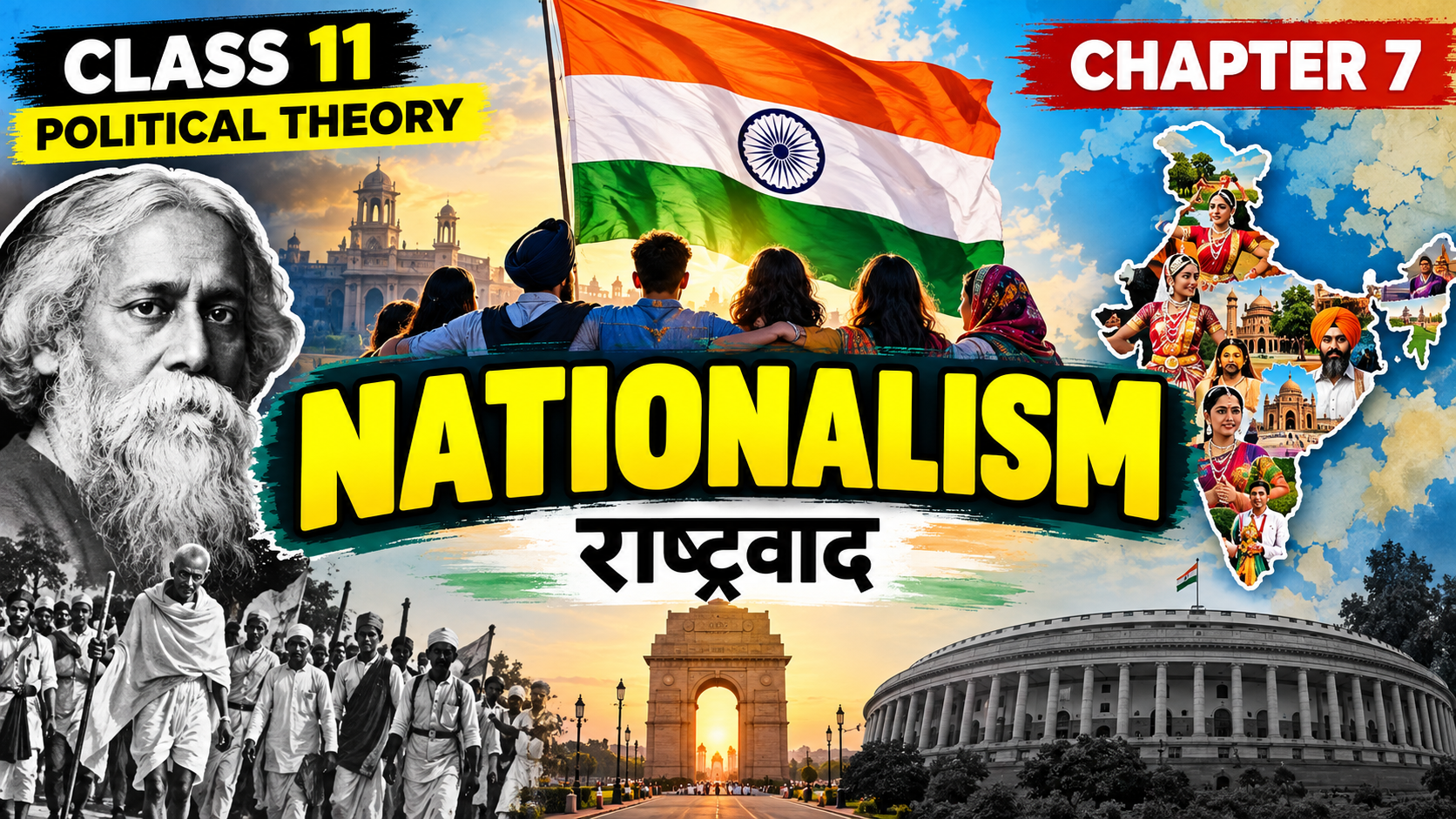
Chapter 7: Nationalism | राष्ट्रवाद
Chapter Overview | अध्याय का परिचय


English: Nationalism is a feeling of belonging to a nation. It creates a sense of unity among people and inspires them to work for their country’s freedom, development and identity.
हिंदी: राष्ट्रवाद वह भावना है जिसके कारण लोग स्वयं को एक राष्ट्र का हिस्सा मानते हैं। यह लोगों में एकता की भावना पैदा करता है और देश की स्वतंत्रता, विकास तथा पहचान के लिए कार्य करने की प्रेरणा देता है।
Learning Objectives | अध्ययन के उद्देश्य
- Understand the concepts of Nation and Nationalism. राष्ट्र और राष्ट्रवाद की अवधारणाओं को समझना।
- Understand the strengths and limitations of nationalism. राष्ट्रवाद की विशेषताओं और सीमाओं को समझना।
- Understand the relationship between democracy and nationalism. लोकतंत्र और राष्ट्रवाद के संबंध को समझना।
7.1 INTRODUCING NATIONALISM
राष्ट्रवाद का परिचय

Meaning of Nationalism | राष्ट्रवाद का अर्थ
English: Nationalism is a political feeling that connects people with a nation. People feel that they belong together and share a common identity, history and future.
हिंदी: राष्ट्रवाद एक राजनीतिक भावना है, जो लोगों को एक राष्ट्र से जोड़ती है। लोग मानते हैं कि उनकी एक सामूहिक पहचान, साझा इतिहास और भविष्य है।
Important Features of Nationalism | राष्ट्रवाद की प्रमुख विशेषताएँ
1. Unity | एकता: It develops a feeling of togetherness among people. यह लोगों में एकता और अपनापन पैदा करता है।
2. Patriotism | देशप्रेम: It can inspire people to work and sacrifice for their country. यह लोगों को देश के लिए कार्य करने और त्याग करने की प्रेरणा देता है।
3. Political Identity | राजनीतिक पहचान: It gives people a sense of belonging to a nation-state. यह लोगों को राष्ट्र-राज्य से जुड़ी राजनीतिक पहचान प्रदान करता है।
4. Freedom | स्वतंत्रता: Nationalist movements have helped people struggle against colonial rule. राष्ट्रवादी आंदोलनों ने लोगों को औपनिवेशिक शासन से स्वतंत्रता प्राप्त करने में सहायता की।
Role of Nationalism in History | इतिहास में राष्ट्रवाद की भूमिका


– Unification of Germany and Italy: In the 19th century, nationalism helped unite smaller kingdoms and territories into larger nation-states. जर्मनी और इटली का एकीकरण: 19वीं शताब्दी में राष्ट्रवाद ने छोटे राज्यों और क्षेत्रों को मिलाकर बड़े राष्ट्र-राज्यों के निर्माण में सहायता की।
– Freedom from colonial rule: India and other Asian and African countries used nationalism in their struggles for independence. औपनिवेशिक शासन से मुक्ति: भारत तथा एशिया और अफ्रीका के अन्य देशों ने स्वतंत्रता के संघर्ष में राष्ट्रवाद का उपयोग किया।
– Division and conflict: Nationalism has sometimes caused separatist movements, hostility and wars. विभाजन और संघर्ष: कभी-कभी राष्ट्रवाद के कारण अलगाववादी आंदोलन, शत्रुता और युद्ध भी हुए।
Remember | याद रखें: Nationalism can unite people, but it can also divide them.
राष्ट्रवाद लोगों को जोड़ भी सकता है और उनमें विभाजन भी पैदा कर सकता है।
7.2 NATIONS AND NATIONALISM
राष्ट्र और राष्ट्रवाद
What is a Nation? | राष्ट्र क्या है?


English: A nation is a community of people who believe that they belong together. They share a collective identity, common aspirations and a vision for their future. A nation is not simply a casual collection of people.
हिंदी: राष्ट्र ऐसे लोगों का समुदाय है, जो यह विश्वास करते हैं कि वे एक-दूसरे से जुड़े हुए हैं। उनकी सामूहिक पहचान, आकांक्षाएँ और भविष्य के प्रति एक साझा दृष्टिकोण होता है। राष्ट्र केवल लोगों की सामान्य भीड़ नहीं है।
Example | उदाहरण: India is a nation with many languages, religions and cultures. Despite these differences, people can share a common national identity.
भारत में अनेक भाषाएँ, धर्म और संस्कृतियाँ हैं। इन भिन्नताओं के बावजूद लोग एक साझा राष्ट्रीय पहचान रखते हैं।
Nation as an ‘Imagined’ Community | राष्ट्र एक ‘कल्पित’ समुदाय के रूप में
English: Members of a nation do not personally know every other member. However, they imagine themselves as part of one community because of shared beliefs, aspirations and identity.
हिंदी: किसी राष्ट्र के सभी लोग एक-दूसरे को व्यक्तिगत रूप से नहीं जानते। फिर भी साझा विश्वासों, आकांक्षाओं और पहचान के कारण वे स्वयं को एक समुदाय का हिस्सा मानते हैं।
Example | उदाहरण: An Indian living in Indore may never meet an Indian living in Arunachal Pradesh, but both may feel that they belong to the same nation.
इंदौर में रहने वाला व्यक्ति अरुणाचल प्रदेश में रहने वाले व्यक्ति से कभी न मिले, फिर भी दोनों स्वयं को एक ही राष्ट्र का हिस्सा मान सकते हैं।
Shared Beliefs

English: A nation exists because its members believe that they belong together. These shared beliefs create a collective identity, just as players who consider themselves one team work together.
हिंदी: राष्ट्र का अस्तित्व उसके सदस्यों के इस विश्वास पर निर्भर करता है कि वे एक-दूसरे से जुड़े हैं। यह विश्वास सामूहिक पहचान बनाता है। जिस प्रकार एक टीम के खिलाड़ी स्वयं को एक टीम मानकर कार्य करते हैं, उसी प्रकार राष्ट्र के लोग भी एकता का अनुभव करते हैं।
History
English: People in a nation develop a sense of historical continuity through collective memories, legends, historical records and cultural achievements.
Jawaharlal Nehru, in The Discovery of India, highlighted the unity underlying India’s diversity.
हिंदी: राष्ट्र के लोग सामूहिक स्मृतियों, किंवदंतियों, ऐतिहासिक अभिलेखों और सांस्कृतिक उपलब्धियों के माध्यम से अपने इतिहास से जुड़ाव महसूस करते हैं।
जवाहरलाल नेहरू ने अपनी पुस्तक The Discovery of India में भारत की विविधता के पीछे मौजूद एकता को महत्त्व दिया।
Territory

English: A nation often identifies itself with a particular territory or homeland. Living on a land over a long period and sharing its history can strengthen the feeling of belonging.
A homeland may be described as a motherland, fatherland or holy land.
हिंदी: कोई राष्ट्र प्रायः एक विशेष क्षेत्र या मातृभूमि से अपनी पहचान जोड़ता है। लंबे समय तक एक भूमि पर रहने और उसका इतिहास साझा करने से अपनेपन की भावना मजबूत होती है।
किसी मातृभूमि को motherland, fatherland या holy land के रूप में भी देखा जा सकता है।
NCERT example: India identifies itself with the rivers, mountains and regions of the Indian subcontinent. The desire to control the same territory can sometimes become a cause of conflict.
एनसीईआरटी उदाहरण: भारत अपनी पहचान भारतीय उपमहाद्वीप की नदियों, पर्वतों और क्षेत्रों से जोड़ता है। एक ही क्षेत्र पर अधिकार की माँग कभी-कभी संघर्ष का कारण बन सकती है।
Shared Political Ideals
English: A nation is also held together by a shared vision of the state and society people want to build. Important ideals may include democracy, secularism and liberalism.
हिंदी: राष्ट्र के लोग जिस राज्य और समाज का निर्माण करना चाहते हैं, उसके प्रति साझा दृष्टिकोण भी उन्हें जोड़ता है। लोकतंत्र, धर्मनिरपेक्षता और उदारवाद इसके प्रमुख आदर्श हो सकते हैं।
- Democracy | लोकतंत्र: People participate in government and enjoy political rights.
- Secularism | धर्मनिरपेक्षता: The state respects religious freedom and does not make one religion a condition of national belonging.
- Liberalism | उदारवाद: Individual liberty and rights are valued.
A nation becomes stronger when citizens respect each other’s rights and fulfil their responsibilities.
जब नागरिक एक-दूसरे के अधिकारों का सम्मान करते हैं और अपने कर्तव्यों का पालन करते हैं, तो राष्ट्र मजबूत बनता है।
Common Political Identity

English: A common language or religion may bring some people together, but it cannot be the basis of every nation. Most societies contain people with different religions, languages and cultures.
In a democracy, national identity should be based on shared political values and constitutional principles, rather than forcing everyone to follow one religion or language.
हिंदी: एक भाषा या धर्म कुछ लोगों को जोड़ सकता है, लेकिन प्रत्येक राष्ट्र की पहचान का आधार केवल यही नहीं हो सकता। अधिकांश समाजों में अलग-अलग धर्मों, भाषाओं और संस्कृतियों के लोग रहते हैं।
लोकतंत्र में राष्ट्रीय पहचान साझा राजनीतिक मूल्यों और संवैधानिक सिद्धांतों पर आधारित होनी चाहिए। सभी लोगों पर एक धर्म या भाषा थोपना उचित नहीं है।
Example | उदाहरण: India has many languages and religions. Equal citizenship allows people from different backgrounds to belong to the same nation.
भारत में अनेक भाषाएँ और धर्म हैं। समान नागरिकता अलग-अलग पृष्ठभूमि के लोगों को एक ही राष्ट्र का हिस्सा बनने का अवसर देती है।
7.3 NATIONAL SELF-DETERMINATION
राष्ट्रीय आत्मनिर्णय
Meaning of National Self-Determination | राष्ट्रीय आत्मनिर्णय का अर्थ

English: National self-determination is the right of a nation or people to govern themselves and decide their own political future.
Groups demanding self-determination may seek recognition as a separate political entity or demand an independent state.
हिंदी: राष्ट्रीय आत्मनिर्णय का अर्थ किसी राष्ट्र या समुदाय का स्वयं पर शासन करने और अपना राजनीतिक भविष्य तय करने का अधिकार है।
आत्मनिर्णय की माँग करने वाले समुदाय अपनी अलग राजनीतिक पहचान या स्वतंत्र राज्य की माँग कर सकते हैं।
The Idea of One Culture – One State | एक संस्कृति – एक राज्य की अवधारणा
English: In 19th-century Europe, the idea that each cultural community should have its own state became popular. After the First World War, the boundaries of several states were reorganised.
However, it was difficult to create separate states for every cultural group. These changes sometimes caused mass migration, displacement and communal violence.
हिंदी: 19वीं शताब्दी के यूरोप में यह विचार लोकप्रिय हुआ कि प्रत्येक सांस्कृतिक समुदाय का अपना राज्य होना चाहिए। प्रथम विश्व युद्ध के बाद कई राज्यों की सीमाओं का पुनर्गठन किया गया।
लेकिन प्रत्येक सांस्कृतिक समुदाय के लिए अलग राज्य बनाना कठिन था। इसके कारण कई स्थानों पर बड़े पैमाने पर पलायन, विस्थापन और सामुदायिक हिंसा हुई।
Problems of National Self-Determination | राष्ट्रीय आत्मनिर्णय की समस्याएँ
1. Minority Rights | अल्पसंख्यकों के अधिकार: Even newly created states may contain different ethnic and cultural groups. नए राज्यों में भी अलग-अलग जातीय और सांस्कृतिक समुदाय हो सकते हैं।
2. Migration and Displacement | पलायन और विस्थापन: Changes in boundaries can force people to leave their homes. सीमाओं में बदलाव के कारण लोगों को अपना घर छोड़ना पड़ सकता है।
3. Border Conflicts | सीमा संघर्ष: Disputes over territories can lead to conflict and violence. क्षेत्रों पर अधिकार को लेकर विवाद और हिंसा हो सकती है।
4. Difficulty in Creating Separate States | अलग राज्य बनाने में कठिनाई: It is not possible to create an independent state for every group that considers itself a nation. प्रत्येक ऐसे समुदाय के लिए स्वतंत्र राज्य बनाना संभव नहीं है, जो स्वयं को एक राष्ट्र मानता है।
Demand for National Self-Determination in Basque


English: The Basque region is located in Spain. It has a distinct language and cultural identity. The Spanish government recognises it as an autonomous region, but some Basque nationalists have demanded a separate country.
During the dictatorship of Francisco Franco, the use of the Basque language was restricted. Although these repressive measures were later withdrawn, demands for greater independence continued.
हिंदी: बास्क क्षेत्र स्पेन में स्थित है। इसकी अपनी विशिष्ट भाषा और सांस्कृतिक पहचान है। स्पेन की सरकार इसे स्वायत्त क्षेत्र के रूप में मान्यता देती है, लेकिन कुछ बास्क राष्ट्रवादी इसे अलग देश बनाना चाहते हैं।
फ्रांसिस्को फ्रांको के तानाशाही शासन के दौरान बास्क भाषा के प्रयोग पर प्रतिबंध लगाए गए थे। बाद में ये प्रतिबंध हटा दिए गए, फिर भी अधिक स्वतंत्रता की माँग जारी रही।
Key Learning | मुख्य सीख: The Basque example shows how cultural identity, language, history and political demands can lead to demands for self-determination.
बास्क का उदाहरण बताता है कि सांस्कृतिक पहचान, भाषा, इतिहास और राजनीतिक माँगें किस प्रकार आत्मनिर्णय की माँग को जन्म दे सकती हैं।
National Liberation Movements in Asia and Africa

English: Many countries in Asia and Africa used nationalism to fight colonial rule. They demanded political independence, dignity, recognition and protection of their collective interests.
However, after independence, several countries still faced conflicts involving minorities and demands for self-determination.
हिंदी: एशिया और अफ्रीका के अनेक देशों ने औपनिवेशिक शासन के विरुद्ध संघर्ष करने के लिए राष्ट्रवाद का उपयोग किया। उन्होंने राजनीतिक स्वतंत्रता, सम्मान, पहचान और अपने सामूहिक हितों की सुरक्षा की माँग की।
लेकिन स्वतंत्रता प्राप्त करने के बाद भी कई देशों को अल्पसंख्यकों से जुड़े विवादों और आत्मनिर्णय की माँगों का सामना करना पड़ा।
Democratic Solution to Nationalist Demands | राष्ट्रवादी माँगों का लोकतांत्रिक समाधान
English: Creating new states is not always the best solution. Existing states should become more democratic and equal so that people from different cultures can live together as equal citizens.
हिंदी: नए राज्यों का निर्माण हमेशा सबसे अच्छा समाधान नहीं होता। मौजूदा राज्यों को अधिक लोकतांत्रिक और समानतापूर्ण बनाना चाहिए, ताकि विभिन्न संस्कृतियों के लोग समान नागरिकों के रूप में साथ रह सकें।
Important points | महत्त्वपूर्ण बिंदु
- Protect minority rights. — अल्पसंख्यकों के अधिकारों की रक्षा करें।
- Respect cultural and linguistic diversity. — सांस्कृतिक और भाषाई विविधता का सम्मान करें।
- Provide equal citizenship. — समान नागरिकता प्रदान करें।
- Resolve disputes through democratic methods. — लोकतांत्रिक तरीकों से विवाद सुलझाएँ।
7.4 NATIONALISM AND PLURALISM
राष्ट्रवाद और बहुलवाद
Meaning of Pluralism | बहुलवाद का अर्थ

English: Pluralism means the existence and acceptance of different cultures, religions, languages and communities within the same society or country.
हिंदी: बहुलवाद का अर्थ एक ही समाज या देश में विभिन्न संस्कृतियों, धर्मों, भाषाओं और समुदायों का अस्तित्व तथा उनकी विविधता को स्वीकार करना है।
Protection of Cultural Minorities | सांस्कृतिक अल्पसंख्यकों की सुरक्षा
English: Democratic countries need to protect the identity and rights of cultural minorities. Such protection allows different communities to maintain their language, religion and traditions while participating equally in national life.
The Indian Constitution contains provisions to protect religious, linguistic and cultural minorities.
हिंदी: लोकतांत्रिक देशों को सांस्कृतिक अल्पसंख्यकों की पहचान और अधिकारों की रक्षा करनी चाहिए। इससे विभिन्न समुदाय अपनी भाषा, धर्म और परंपराओं को बनाए रखते हुए राष्ट्रीय जीवन में समान रूप से भाग ले सकते हैं।
भारतीय संविधान में धार्मिक, भाषाई और सांस्कृतिक अल्पसंख्यकों की सुरक्षा के लिए प्रावधान हैं।
Group Rights | समूह अधिकार
English: Group rights are rights given to particular communities to protect their identity and ensure equal treatment.
These may include:
- Protection of language and culture.
- Protection of religious freedom.
- Equal treatment under the law.
- In some countries, representation of communities in legislative bodies and state institutions.
हिंदी: समूह अधिकार वे अधिकार हैं, जो विशेष समुदायों की पहचान की रक्षा और समान व्यवहार सुनिश्चित करने के लिए दिए जाते हैं।
इनमें शामिल हो सकते हैं:
- भाषा और संस्कृति की सुरक्षा।
- धार्मिक स्वतंत्रता की रक्षा।
- कानून के अंतर्गत समान व्यवहार।
- कुछ देशों में विधायी संस्थाओं और सरकारी संस्थानों में समुदायों का प्रतिनिधित्व।
Inclusive National Identity | समावेशी राष्ट्रीय पहचान
English: A national identity should include all cultural communities and recognise their contributions. No group should feel excluded because of its religion, language or culture.
हिंदी: राष्ट्रीय पहचान में सभी सांस्कृतिक समुदायों को शामिल किया जाना चाहिए और उनके योगदान को मान्यता दी जानी चाहिए। किसी भी समुदाय को उसके धर्म, भाषा या संस्कृति के कारण अलग-थलग महसूस नहीं होना चाहिए।
Example | उदाहरण: India’s principle of unity in diversity reflects the idea that people with different cultural identities can belong to one nation.
भारत का विविधता में एकता का सिद्धांत दर्शाता है कि अलग-अलग सांस्कृतिक पहचान वाले लोग एक राष्ट्र का हिस्सा हो सकते हैं।
TAGORE’S CRITIQUE OF NATIONALISM
राष्ट्रवाद की टैगोर द्वारा आलोचना

Rabindranath Tagore | रवीन्द्रनाथ टैगोर
English: Rabindranath Tagore supported India’s freedom from colonial rule, but he criticised narrow and aggressive forms of nationalism. He believed that patriotism should not become more important than humanity.
हिंदी: रवीन्द्रनाथ टैगोर भारत को औपनिवेशिक शासन से स्वतंत्र कराने के समर्थक थे, लेकिन वे संकीर्ण और आक्रामक राष्ट्रवाद के आलोचक थे। उनका मानना था कि देशभक्ति मानवता से अधिक महत्त्वपूर्ण नहीं होनी चाहिए।
Tagore’s Main Ideas | टैगोर के प्रमुख विचार
1. Humanity Above Narrow Patriotism | संकीर्ण देशभक्ति से ऊपर मानवता
English: Love for one’s country should not lead to hatred towards other countries or people.
हिंदी: अपने देश से प्रेम करने का अर्थ दूसरे देशों या लोगों से घृणा करना नहीं होना चाहिए।
2. Respect for Other Cultures | अन्य संस्कृतियों का सम्मान
English: People should value their own culture while remaining open to learning from other cultures and civilisations.
हिंदी: लोगों को अपनी संस्कृति का सम्मान करना चाहिए, साथ ही दूसरी संस्कृतियों और सभ्यताओं से सीखने के लिए भी तैयार रहना चाहिए।
3. Opposition to Imperialism | साम्राज्यवाद का विरोध
English: Tagore opposed colonial domination and supported India’s independence. However, he did not believe that rejecting colonial rule required rejecting everything from the West.
हिंदी: टैगोर ने औपनिवेशिक प्रभुत्व का विरोध किया और भारत की स्वतंत्रता का समर्थन किया। लेकिन उनका मानना था कि औपनिवेशिक शासन का विरोध करने के लिए पश्चिम की हर चीज को अस्वीकार करना आवश्यक नहीं है।
4. Danger of Narrow Nationalism | संकीर्ण राष्ट्रवाद का खतरा
English: Excessive nationalism can create hostility towards other communities and limit the freedom of thought.
हिंदी: अत्यधिक राष्ट्रवाद दूसरे समुदायों के प्रति शत्रुता पैदा कर सकता है और स्वतंत्र विचारों को सीमित कर सकता है।
Central Idea | मुख्य विचार
English: Patriotism should work alongside humanity, tolerance and respect for others.
हिंदी: देशभक्ति के साथ मानवता, सहिष्णुता और दूसरों के प्रति सम्मान भी होना चाहिए।
Chapter Summary | अध्याय का सारांश

1. Nation | राष्ट्र: A community of people who believe that they belong together. ऐसा समुदाय जिसके लोग स्वयं को एक-दूसरे से जुड़ा हुआ मानते हैं।
2. Nationalism | राष्ट्रवाद: A feeling of belonging to a nation and sharing a collective identity. किसी राष्ट्र से जुड़ाव और सामूहिक पहचान की भावना।
3. Shared Beliefs | साझा विश्वास: People feel united because they believe they belong to the same community. लोग साझा समुदाय का हिस्सा होने के विश्वास से एकजुट होते हैं।
4. History and Territory | इतिहास और क्षेत्र: Shared history and a common homeland can strengthen national identity. साझा इतिहास और मातृभूमि राष्ट्रीय पहचान को मजबूत कर सकते हैं।
5. National Self-Determination | राष्ट्रीय आत्मनिर्णय: The right of a people to govern themselves and decide their political future. लोगों का स्वयं शासन करने और अपना राजनीतिक भविष्य तय करने का अधिकार।
6. Pluralism | बहुलवाद: Different cultures and communities should be respected and protected. विभिन्न संस्कृतियों और समुदायों का सम्मान और संरक्षण होना चाहिए।
7. Democracy | लोकतंत्र: Equal rights and inclusive citizenship help manage conflicting nationalist demands. समान अधिकार और समावेशी नागरिकता राष्ट्रवादी माँगों के बीच मतभेदों को सुलझाने में सहायता करते हैं।
8. Tagore’s Critique | टैगोर की आलोचना: Nationalism should not become narrow, intolerant or hostile to humanity. राष्ट्रवाद संकीर्ण, असहिष्णु या मानवता के प्रति शत्रुतापूर्ण नहीं होना चाहिए।
Important Terms | महत्त्वपूर्ण शब्दावली
| English Term | हिंदी अर्थ |
|---|---|
| Nation | राष्ट्र |
| Nationalism | राष्ट्रवाद |
| Nation-State | राष्ट्र-राज्य |
| Imagined Community | कल्पित समुदाय |
| Collective Identity | सामूहिक पहचान |
| National Self-Determination | राष्ट्रीय आत्मनिर्णय |
| Sovereignty | संप्रभुता |
| Pluralism | बहुलवाद |
| Cultural Minority | सांस्कृतिक अल्पसंख्यक |
| National Liberation | राष्ट्रीय मुक्ति |
| Patriotism | देशभक्ति |
| Secularism | धर्मनिरपेक्षता |
| Imperialism | साम्राज्यवाद |
| Inclusive Identity | समावेशी पहचान |
NCERT Exercise Questions | अभ्यास प्रश्न
ये प्रश्न आपकी NCERT पुस्तक के अध्याय के अंत में दिए गए हैं। अभी केवल प्रश्न दिए गए हैं, उत्तर नहीं।
1. How is a nation different from other forms of collective belonging? राष्ट्र सामूहिक जुड़ाव के अन्य रूपों से किस प्रकार अलग है?
2. What do you understand by the right to national self-determination? How has this idea resulted in both formation of and challenges to nation-states? राष्ट्रीय आत्मनिर्णय के अधिकार से आप क्या समझते हैं? इस विचार से राष्ट्र-राज्यों का निर्माण और उनके सामने चुनौतियाँ किस प्रकार उत्पन्न हुई हैं?
3. “Nationalism can unite people as well as divide them.” Illustrate with examples. “राष्ट्रवाद लोगों को एकजुट भी कर सकता है और उनमें विभाजन भी पैदा कर सकता है।” उदाहरण सहित समझाइए।
4. Neither descent, nor language, nor religion or ethnicity can claim to be a common factor in nationalisms all over the world. Comment. न वंश, न भाषा, न धर्म और न ही जातीयता को विश्व के सभी राष्ट्रवादों का समान आधार माना जा सकता है। टिप्पणी कीजिए।
5. Illustrate with suitable examples the factors that lead to the emergence of nationalist feelings. उपयुक्त उदाहरणों सहित उन कारकों को समझाइए, जो राष्ट्रवादी भावनाओं के उदय का कारण बनते हैं।
6. How is a democracy more effective than authoritarian governments in dealing with conflicting nationalist aspirations? परस्पर विरोधी राष्ट्रवादी आकांक्षाओं से निपटने में लोकतंत्र तानाशाही सरकारों की तुलना में अधिक प्रभावी कैसे है?
7. What do you think are the limitations of nationalism? आपके विचार में राष्ट्रवाद की क्या सीमाएँ हैं?