Chapter 8: Local Governments
Class 11 Political Science | NCERT: Indian Constitution at Work | Chapter pages 176–195
1. Introduction — परिचय
English: In a democracy, elected governments are needed not only at the Central and State levels but also at the local level. Local governments deal with the day-to-day problems and development needs of ordinary people.
हिंदी: लोकतंत्र में केवल केंद्र और राज्य स्तर पर ही नहीं, बल्कि स्थानीय स्तर पर भी निर्वाचित सरकार आवश्यक है। स्थानीय सरकारें आम लोगों की दैनिक समस्याओं तथा विकास संबंधी आवश्यकताओं का समाधान करती हैं।
Levels of Government | शासन के स्तर
Central Government


केंद्र सरकार
State Government
राज्य सरकार
Rural Local Government
ग्रामीण स्थानीय शासन
Panchayati Raj
Urban Local Government
शहरी स्थानीय शासन
Nagarpalikas
Concept diagram based on the chapter’s explanation of local government.
2. Meaning and importance of local government — स्थानीय शासन का अर्थ एवं महत्त्व
English: Local government is the government at the village and district levels and, in urban areas, through municipal bodies. It is closest to the people and makes administration more accessible and responsive.
हिंदी: स्थानीय शासन गाँव और जिले के स्तर पर तथा शहरी क्षेत्रों में नगरपालिका संस्थाओं के माध्यम से संचालित शासन है। यह जनता के सबसे निकट होता है और प्रशासन को अधिक सुलभ एवं उत्तरदायी बनाता है।
Importance | महत्त्व
– People’s participation — जनभागीदारी: People participate directly in decisions affecting their lives. लोग अपने जीवन को प्रभावित करने वाले निर्णयों में सीधे भाग लेते हैं।
– Local knowledge — स्थानीय जानकारी: Local representatives understand local needs and priorities better. स्थानीय प्रतिनिधि क्षेत्र की समस्याओं और प्राथमिकताओं को बेहतर समझते हैं।
– Quick solutions — त्वरित समाधान: Problems can be addressed with less inconvenience and cost. समस्याओं का समाधान कम परेशानी और कम खर्च में किया जा सकता है।
– Accountability — जवाबदेही: Representatives can be questioned by local residents. स्थानीय निवासी अपने प्रतिनिधियों से जवाब माँग सकते हैं।
– Local development — स्थानीय विकास: Local bodies help improve roads, schools, drinking water and sanitation. स्थानीय संस्थाएँ सड़क, विद्यालय, पेयजल और स्वच्छता जैसी सुविधाओं के विकास में मदद करती हैं।
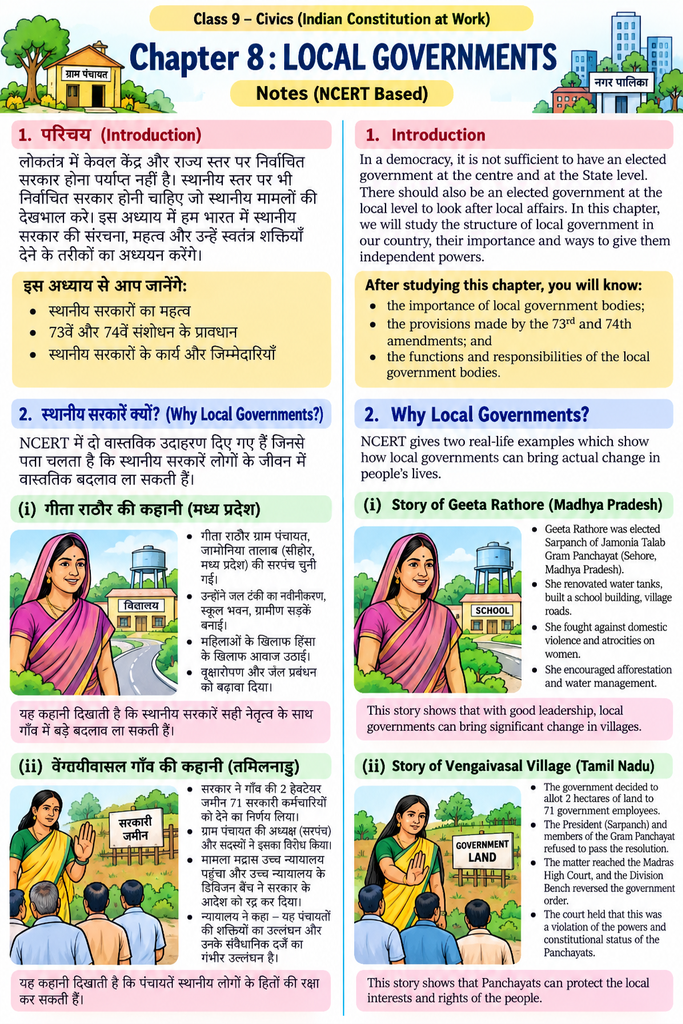
NCERT example: Geeta Rathore, Sarpanch of Jamonia Talab Gram Panchayat in Sehore district, Madhya Pradesh, worked on water tanks, roads, a school building, women’s safety and environmental awareness. (NCERT, pp. 177–178)
उदाहरण: मध्य प्रदेश के सीहोर जिले की जमोनिया तालाब ग्राम पंचायत की सरपंच गीता राठौर ने पानी की टंकियों, सड़कों, विद्यालय भवन, महिला सुरक्षा और पर्यावरण जागरूकता के लिए कार्य किया।
3. Growth of local government in India — भारत में स्थानीय शासन का विकास
Historical timeline | ऐतिहासिक समयरेखा
- Ancient India — प्राचीन भारतEnglish: Village assemblies called Sabhas existed, and Panchayats resolved village-level issues.हिंदी: गाँवों में सभाएँ होती थीं और पंचायतें गाँव के स्तर की समस्याओं का समाधान करती थीं।
- 1882 — Lord RiponEnglish: Lord Ripon initiated the creation of local boards in modern India.हिंदी: आधुनिक भारत में लॉर्ड रिपन ने स्थानीय बोर्डों के गठन की पहल की।
- 1919 — Government of India ActEnglish: Village Panchayats were established in several provinces.हिंदी: कई प्रांतों में ग्राम पंचायतों की स्थापना हुई।
- 1935 — Government of India ActEnglish: The development of village Panchayats continued.हिंदी: ग्राम पंचायतों के विकास की प्रक्रिया जारी रही।
- 1952 — Community Development ProgrammeEnglish: It aimed to promote people’s participation in local development.हिंदी: इसका उद्देश्य स्थानीय विकास में लोगों की भागीदारी बढ़ाना था।
- 1989 — P.K. Thungon CommitteeEnglish: It recommended constitutional recognition, regular elections, appropriate functions and funds for local bodies.हिंदी: इस समिति ने स्थानीय संस्थाओं को संवैधानिक मान्यता, नियमित चुनाव, उपयुक्त कार्य और धन उपलब्ध कराने की सिफारिश की।
- 1992–1993 — Constitutional amendmentsEnglish: The 73rd and 74th Amendments were passed in 1992 and came into force in 1993.हिंदी: 73वाँ और 74वाँ संविधान संशोधन 1992 में पारित हुए और 1993 में लागू हुए।
Mahatma Gandhi’s view — महात्मा गांधी का विचार
English: Gandhi supported decentralisation of political and economic power. He wanted villages to become self-sustaining units capable of managing their own affairs.
हिंदी: गांधीजी राजनीतिक और आर्थिक शक्ति के विकेंद्रीकरण के समर्थक थे। वे चाहते थे कि गाँव आत्मनिर्भर इकाइयाँ बनें और अपने कार्यों का प्रबंधन स्वयं कर सकें।
Why did local government receive limited constitutional importance initially? — शुरुआत में स्थानीय शासन को संविधान में सीमित महत्त्व क्यों मिला?
1. Partition and national unity: After Partition, there was a strong concern for national unity and integration. विभाजन और राष्ट्रीय एकता: विभाजन के बाद राष्ट्रीय एकता और अखंडता को लेकर चिंता थी।
2. Concerns about rural society: Dr. B.R. Ambedkar and others feared that caste divisions and local factions could undermine democratic local government. ग्रामीण समाज की चिंताएँ: डॉ. बी.आर. आंबेडकर सहित कुछ सदस्यों को आशंका थी कि जातिगत विभाजन और स्थानीय गुटबाजी लोकतांत्रिक स्थानीय शासन को कमजोर कर सकते हैं।
3. Constitutional position: Local government was assigned to the States and mentioned in the Directive Principles of State Policy. संवैधानिक स्थिति: स्थानीय शासन को राज्य सूची के अंतर्गत रखा गया तथा राज्य के नीति-निदेशक तत्त्वों में इसका उल्लेख किया गया। यह प्रावधान न्यायालय द्वारा सीधे लागू नहीं कराया जा सकता था।
4. The 73rd and 74th Constitutional Amendments — 73वाँ एवं 74वाँ संविधान संशोधन

English: These amendments were passed by Parliament in 1992 and came into force in 1993. They aimed to strengthen local governments and bring uniformity to their structure and functioning.
हिंदी: इन संशोधनों को संसद ने 1992 में पारित किया और ये 1993 में लागू हुए। इनका उद्देश्य स्थानीय सरकारों को मजबूत बनाना तथा उनकी संरचना और कार्यप्रणाली में एकरूपता लाना था।
| Basis / आधार | 73rd Amendment / 73वाँ संशोधन | 74th Amendment / 74वाँ संशोधन |
|---|---|---|
| Area / क्षेत्र | Rural / ग्रामीण | Urban / शहरी |
| Institutions / संस्थाएँ | Panchayati Raj Institutions (PRIs) / पंचायती राज संस्थाएँ | Nagarpalikas / नगरपालिका संस्थाएँ |
| Schedule / अनुसूची | Eleventh Schedule / 11वीं अनुसूची | Twelfth Schedule / 12वीं अनुसूची |
| Main purpose / मुख्य उद्देश्य | Strengthen village and district-level government / ग्रामीण शासन को मजबूत करना | Strengthen urban local government / शहरी स्थानीय शासन को मजबूत करना |
A. Three-tier Panchayati Raj structure — त्रिस्तरीय पंचायती राज व्यवस्था
Zilla Panchayat
जिला पंचायत — District level
Block / Mandal / Taluka Panchayat
मध्यवर्ती स्तर की पंचायत
Gram Panchayat
ग्राम पंचायत — Village level
Gram Sabha — ग्राम सभा
All adult members registered as voters in the Panchayat area. / पंचायत क्षेत्र में मतदाता के रूप में पंजीकृत सभी वयस्क सदस्य।
Important NCERT points | महत्त्वपूर्ण तथ्य
- The intermediate level may be omitted in smaller States. छोटे राज्यों में मध्यवर्ती स्तर को छोड़ा जा सकता है।
- The Gram Sabha is mandatory; its functions are determined by State legislation. ग्राम सभा का गठन अनिवार्य है; इसके कार्य राज्य के कानून द्वारा निर्धारित होते हैं।
- Panchayats have a five-year term. पंचायतों का कार्यकाल पाँच वर्ष होता है।
- If a Panchayat is dissolved early, fresh elections must be held within six months. पंचायत समय से पहले भंग होने पर छह महीने के भीतर नए चुनाव कराए जाने चाहिए।
B. Reservations — आरक्षण
English:
- At least one-third of the positions in Panchayat institutions are reserved for women under the provisions described in this NCERT chapter.
- Seats are reserved for Scheduled Castes (SCs) and Scheduled Tribes (STs) in proportion to their population.
- States may also provide reservations for Other Backward Classes (OBCs).
- Reservations also apply to chairperson positions at all three Panchayat levels.
हिंदी:
- इस NCERT अध्याय में वर्णित प्रावधानों के अनुसार पंचायत संस्थाओं में कम-से-कम एक-तिहाई पद महिलाओं के लिए आरक्षित हैं।
- अनुसूचित जातियों (SC) और अनुसूचित जनजातियों (ST) के लिए उनकी जनसंख्या के अनुपात में सीटें आरक्षित हैं।
- राज्य अन्य पिछड़ा वर्ग (OBC) के लिए भी आरक्षण दे सकते हैं।
- आरक्षण पंचायतों के तीनों स्तरों पर अध्यक्ष पदों पर भी लागू होता है।
Impact | प्रभाव: Reservations increased the representation of women and disadvantaged communities in local politics. However, the chapter also notes that some elected women initially acted as proxies for male family members.
प्रभाव: आरक्षण से स्थानीय राजनीति में महिलाओं और वंचित समुदायों का प्रतिनिधित्व बढ़ा। हालाँकि, अध्याय बताता है कि कुछ निर्वाचित महिलाएँ शुरुआत में अपने परिवार के पुरुष सदस्यों के प्रतिनिधि की तरह भी काम करती थीं।
C. Transfer of subjects — विषयों का हस्तांतरण
The Eleventh Schedule lists 29 subjects related mainly to local development and welfare. The actual transfer of powers and functions depends on State legislation.
11वीं अनुसूची में स्थानीय विकास और कल्याण से जुड़े 29 विषय हैं। इन विषयों से संबंधित शक्तियों और कार्यों का वास्तविक हस्तांतरण राज्य के कानूनों पर निर्भर करता है।
| English | हिंदी |
|---|---|
| Agriculture | कृषि |
| Minor irrigation and water management | लघु सिंचाई एवं जल प्रबंधन |
| Rural housing | ग्रामीण आवास |
| Drinking water | पेयजल |
| Roads and culverts | सड़कें एवं पुलिया |
| Rural electrification | ग्रामीण विद्युतीकरण |
| Poverty alleviation programmes | गरीबी उन्मूलन कार्यक्रम |
| Education and libraries | शिक्षा एवं पुस्तकालय |
| Health and sanitation | स्वास्थ्य एवं स्वच्छता |
| Women and child development | महिला एवं बाल विकास |
| Social welfare | सामाजिक कल्याण |
| Public distribution system | सार्वजनिक वितरण प्रणाली |
D. Other important provisions — अन्य महत्त्वपूर्ण प्रावधान
– State Election Commission: Conducts Panchayat elections independently of the State government’s ordinary administration. राज्य निर्वाचन आयोग: पंचायत चुनाव स्वतंत्र रूप से आयोजित करता है।
– State Finance Commission: Must be appointed every five years to review the financial position of local governments and revenue distribution. राज्य वित्त आयोग: स्थानीय सरकारों की वित्तीय स्थिति और राजस्व वितरण की समीक्षा के लिए प्रत्येक पाँच वर्ष में गठित किया जाना आवश्यक है।
– Adivasi areas: A separate law was passed in 1996 to extend the Panchayat system to certain Adivasi areas, with protection for traditional community resource management and stronger Gram Sabha powers. आदिवासी क्षेत्र: कुछ आदिवासी क्षेत्रों में पंचायत व्यवस्था के विस्तार के लिए 1996 में अलग कानून बनाया गया, जिसमें पारंपरिक संसाधन प्रबंधन की रक्षा और ग्राम सभा की शक्तियों को महत्त्व दिया गया।
5. The 74th Amendment and urban local government — 74वाँ संशोधन एवं शहरी स्थानीय शासन
English: The 74th Amendment deals with urban local bodies, known as Nagarpalikas. It incorporates provisions similar to those of the 73rd Amendment, including elections, reservations, and State Election and Finance Commissions. Urban local body functions are listed in the Twelfth Schedule.
हिंदी: 74वाँ संविधान संशोधन शहरी स्थानीय निकायों, जिन्हें नगरपालिका संस्थाएँ कहा जाता है, से संबंधित है। इसमें चुनाव, आरक्षण तथा राज्य निर्वाचन आयोग और राज्य वित्त आयोग जैसे प्रावधान शामिल हैं। शहरी स्थानीय निकायों के कार्य 12वीं अनुसूची में दिए गए हैं।
Definition of an urban area in the NCERT chapter — NCERT अध्याय के अनुसार शहरी क्षेत्र की परिभाषा
The chapter gives these Census of India criteria:
- Minimum population of 5,000.
- At least 75% of the male working population engaged in non-agricultural occupations.
- Population density of at least 400 persons per square kilometre.
अध्याय में भारत की जनगणना के अनुसार शहरी क्षेत्र के ये मानदंड दिए गए हैं:
- न्यूनतम जनसंख्या 5,000।
- कार्यरत पुरुष जनसंख्या का कम-से-कम 75% गैर-कृषि व्यवसायों में लगा हो।
- जनसंख्या घनत्व कम-से-कम 400 व्यक्ति प्रति वर्ग किलोमीटर हो।
ये आँकड़े आपकी NCERT PDF के पृष्ठ 187 पर दिए गए हैं।
6. Implementation of the amendments — संशोधनों का क्रियान्वयन
English: The amendments strengthened the constitutional position of local governments, increased elected representation and encouraged women’s participation. However, many local bodies continued to have limited autonomy, insufficient funds and incomplete transfer of responsibilities.
हिंदी: इन संशोधनों ने स्थानीय सरकारों की संवैधानिक स्थिति को मजबूत किया, निर्वाचित प्रतिनिधियों की संख्या बढ़ाई और महिलाओं की भागीदारी को प्रोत्साहित किया। फिर भी अनेक स्थानीय निकायों के पास सीमित स्वायत्तता, अपर्याप्त धन और अधूरे रूप में हस्तांतरित जिम्मेदारियाँ बनी रहीं।
Main problems | प्रमुख समस्याएँ

1. Limited powers — सीमित शक्तियाँ
English: Many States have not transferred all relevant functions to local bodies.
हिंदी: अनेक राज्यों ने सभी संबंधित कार्य स्थानीय निकायों को हस्तांतरित नहीं किए हैं।

2. Shortage of funds — धन की कमी
English: Local bodies depend heavily on grants from State and Central governments.
हिंदी: स्थानीय निकाय राज्य और केंद्र सरकारों से मिलने वाले अनुदानों पर बहुत अधिक निर्भर रहते हैं।

3. Social inequality — सामाजिक असमानता
English: Dominant social groups may resist sharing power with disadvantaged communities.
हिंदी: प्रभावशाली सामाजिक समूह वंचित समुदायों के साथ सत्ता साझा करने का विरोध कर सकते हैं।
7. NCERT examples to remember — याद रखने योग्य उदाहरण
Example 1: Vengaivasal village, Tamil Nadu
English: The Gram Panchayat resisted an order concerning the allotment of village land. The Division Bench of the Madras High Court reversed the single judge’s order and upheld the constitutional status and powers of the Panchayat.
हिंदी: तमिलनाडु के वेंगईवासल गाँव की ग्राम पंचायत ने गाँव की भूमि के आवंटन से संबंधित आदेश का विरोध किया। मद्रास उच्च न्यायालय की खंडपीठ ने एकल न्यायाधीश के आदेश को पलटते हुए पंचायत की संवैधानिक स्थिति और शक्तियों को मान्यता दी।
Lesson / सीख: Local governments can protect local interests and exercise their constitutional powers.
स्थानीय सरकारें स्थानीय हितों की रक्षा कर सकती हैं और अपनी संवैधानिक शक्तियों का प्रयोग कर सकती हैं।
Example 2: Bolivia
English: The NCERT chapter discusses Bolivia as an example of democratic decentralisation. Local governments were given responsibilities for local health and education facilities, along with financial transfers.
हिंदी: NCERT अध्याय में बोलीविया को लोकतांत्रिक विकेंद्रीकरण के उदाहरण के रूप में प्रस्तुत किया गया है। वहाँ स्थानीय सरकारों को स्वास्थ्य और शिक्षा संबंधी सुविधाओं की जिम्मेदारी तथा वित्तीय सहायता दी गई।
Lesson / सीख: Decentralisation works better when local governments receive both responsibilities and financial resources.
विकेंद्रीकरण तब अधिक प्रभावी होता है जब स्थानीय सरकारों को जिम्मेदारियों के साथ पर्याप्त वित्तीय संसाधन भी मिलते हैं।
8. Conclusion — निष्कर्ष
English: Local government is an essential part of democracy because it brings decision-making closer to the people. The 73rd and 74th Amendments created a stronger constitutional foundation for rural and urban local bodies. However, real decentralisation requires adequate powers, funds and freedom to make decisions according to local needs.
हिंदी: स्थानीय शासन लोकतंत्र का महत्त्वपूर्ण हिस्सा है क्योंकि यह निर्णय लेने की प्रक्रिया को जनता के निकट लाता है। 73वें और 74वें संशोधनों ने ग्रामीण और शहरी स्थानीय निकायों को मजबूत संवैधानिक आधार दिया। लेकिन वास्तविक विकेंद्रीकरण के लिए पर्याप्त शक्तियाँ, धन और स्थानीय आवश्यकताओं के अनुसार निर्णय लेने की स्वतंत्रता आवश्यक है।
9. Quick revision table — त्वरित पुनरावृत्ति
| Topic / विषय | Important fact / महत्त्वपूर्ण तथ्य |
|---|---|
| 73rd Amendment / 73वाँ संशोधन | Rural local government / ग्रामीण स्थानीय शासन |
| 74th Amendment / 74वाँ संशोधन | Urban local government / शहरी स्थानीय शासन |
| Passed / पारित | 1992 |
| Came into force / लागू | 1993 |
| Panchayat term / पंचायत का कार्यकाल | 5 years / 5 वर्ष |
| Fresh elections after dissolution / भंग होने पर चुनाव | Within 6 months / 6 महीने के भीतर |
| Eleventh Schedule / 11वीं अनुसूची | 29 subjects / 29 विषय |
| Twelfth Schedule / 12वीं अनुसूची | Urban local body functions / शहरी निकायों के कार्य |
| State Finance Commission / राज्य वित्त आयोग | Every 5 years / प्रत्येक 5 वर्ष |
| Gram Sabha / ग्राम सभा | Registered adult voters of the Panchayat area / पंचायत क्षेत्र के पंजीकृत वयस्क मतदाता |
Practice questions — अभ्यास प्रश्न
- What is local government? / स्थानीय शासन क्या है?
- Explain any four advantages of local government. / स्थानीय शासन के कोई चार लाभ समझाइए।
- Distinguish between the 73rd and 74th Amendments. / 73वें और 74वें संशोधनों में अंतर बताइए।
- Explain the three-tier structure of Panchayati Raj. / पंचायती राज की त्रिस्तरीय व्यवस्था समझाइए।
- What are the reservation provisions under the 73rd Amendment? / 73वें संशोधन के अंतर्गत आरक्षण के क्या प्रावधान हैं?
- Why do local governments often lack effective autonomy? / स्थानीय सरकारों को प्रभावी स्वायत्तता प्रायः क्यों नहीं मिल पाती?
